

Iced Chocolate Is the Premium Cold Beverage Story for 2026

Recent Posts
Categories
The most structurally important shift in UK beverage culture over the past two years has very little to do with the weather.
Cold coffee, iced chocolate and chilled premium drinks have decoupled from summer. They are now year-round menu staples, year-round NPD priorities, and year-round shelf space in chilled and ambient retail. Caffè Nero's cold drink sales rose 56% year-on-year in July 2025. In the United States, where the UK consistently tracks behind by 18 to 24 months, cold drinks now account for over 75% of Starbucks' total sales, up from just 37% in 2013. The UK Ready-to-Drink Tea and Coffee market is forecast to grow at a 5.36% CAGR, from USD 580.57 million in 2024 to USD 928.84 million by 2033, with cold brew the fastest-growing segment at 7.08% CAGR through 2031.
For ingredient buyers, cold-format flavour systems are now a procurement spec, not a "nice to have."
Iced Chocolate Is Becoming Its Own Category
For most of the last decade, "iced chocolate" was a polite menu line, sold in low volume from May to August and treated as the dessert-leaning cousin of the iced latte. That's all changed.
Frozen hot chocolate, French-style 70%+ cacao thick chocolate, blended chocolate frappés and chocolate mocha hybrids are now appearing as named SKUs across both independent and chain menus. The TikTok-driven #frenchhotchocolate trend reached over 34.1 million views and translated directly into cold-format menu items. Caffè Nero's chocolate frappé and chocolate-and-hazelnut frappé sit on the iced and cold drinks menu alongside the wider blended frappé range, priced at the premium end of the chain's cold offer. UK premium chocolate sat at USD 2,331.9 million in 2024 and is projected to reach USD 2,817.9 million by 2029. Dark chocolate sales grew 22% year-on-year, against milk chocolate's 10%.
For ingredients brief, this format diversification makes a difference. Iced shaken builds need cold-dispersible cocoa and stabilised syrups. Blended frappés need emulsification and freeze-texture performance. Long-life RTDs need cold-stable systems that survive chilled distribution and clean-label scrutiny.
Two more things are changing the brief. First, chocolate feels lighter and more refreshing when served cold, which is why the category appeals to adult palates without excessive sweetness; that single sensory shift is what is opening up year-round menu placement. Second, the buyer no longer wants a single hero SKU, rather, they're looking for a range that spans dark and white chocolate bases, with serves that read as indulgent, refreshing and (where appropriate) wellness-coded all at once.
The Five Trends Shaping 2026 Cold Chocolate NPD
Premiumisation as affordable luxury. With larger discretionary spend constrained, premium beverages as affordable luxury are increasingly treated as a small, accessible indulgence in place of bigger expenditures. The premium cold chocolate occasion is currently sitting in that category. Single-origin cocoa, Ecuadorian and Peruvian provenance, and naturally alkalized dark cocoa systems are all viable B2B briefs for the next twelve months.
Functional integration. Indulgence, refreshment and wellness are no longer mutually exclusive in the consumer mind. Adaptogenic cacao and nootropic ingredients, including ashwagandha, maca, reishi, L-theanine and lion's mane, are moving into mainstream functional beverage NPD: a wider story we have been tracking across UK functional beverages. Protein-fortified cold chocolate is also setting a benchmark: Starbucks and Arla launched a 20g-protein RTD coffee range in the UK in June 2024. The sugar-free chocolate sub-category is forecast to grow at a mid-single-digit CAGR through 2030, outpacing the wider chocolate market.
Flavour innovation, increasingly compressed in cycle. The viral-to-NPD timeline now runs in quarters, not years. The Dubai Chocolate pistachio trend is now feeding directly into UK cafe and hot-chocolate menus, with banana, blackforest and pumpkin spice variants appearing alongside it. Puratos' Taste Tomorrow research recorded a 137% surge in pistachio chocolate filling searches through 2025, with chocolate bar fillings overall up 191% in Q2 2025 alone. Caffè Nero's Pistachio Iced Latte and Salted Caramel and Pistachio Frappé sit on the iced drinks menu alongside chocolate frappés. Salted caramel, hazelnut, swicy (sweet-spicy) and tropical pairings such as banana and chocolate are the active vectors, all feeding into our wider 2026 flavour trends to watch.
Plant-based milk integration as a baseline standard. Oat milk has become the dominant cold beverage carrier across UK cafes, with almond and coconut in growing secondary roles. The technical implication is that cocoa systems must perform against non-dairy pH profiles, and emulsifier systems need to stabilise chocolate and oat milk RTDs across chilled shelf life. Plant-based creamer powders and pre-blended bases are now the formulation default, not the exception.
Provenance and sustainability as commercial prerequisites. Sustainability claims on chocolate are now active purchase drivers, and 48% of UK consumers buy local food when possible, reinforcing the broader pull toward provenance-led ranges. Barry Callebaut's partnership with Planet A Foods in November 2025, scaling ChoViva, a cocoa-free fermented sunflower seed alternative, signals that supply chain hedging is now happening at the largest end of the industry.
Combination Ideas
Dark chocolate base, adult-leaning indulgence
- Iced Blackforest Chocolate (cherry-led, dark, classic): rides the comfort-food premium twist.
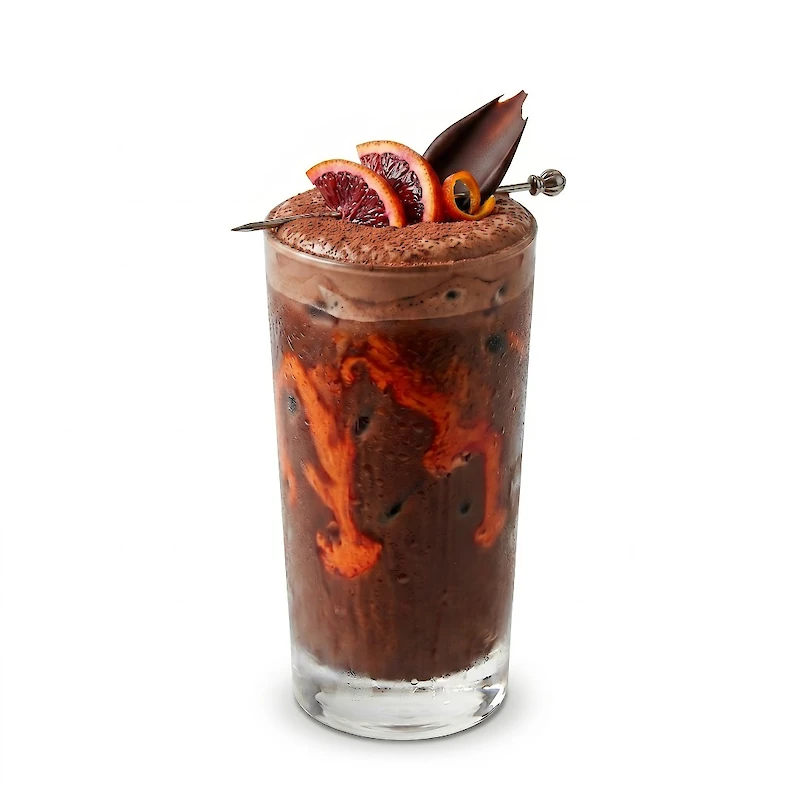
- Blood Orange Dark Chocolate (bittersweet, refreshing): citrus-forward, sits at the intersection of indulgence and refreshment.
- Iced Chocolate Orange (warm, citrussy, classic): a familiar British flavour memory in a cold format.
- Salted Caramel Mocha (indulgent but balanced): the proven volume earner, swicy without being sweet.
- Ginger & Lime Chocolate (lifted, contemporary): a bridge into spice-and-citrus pairings.
White chocolate base, less-sweet adult serves
- Banana Iced White Chocolate (smooth, creamy, dessert-led): captures the banana-bread-meets-chocolate trend.
- Blueberry White Chocolate (jammy, ripe, mellow): visual contrast and an antioxidant-coded story.
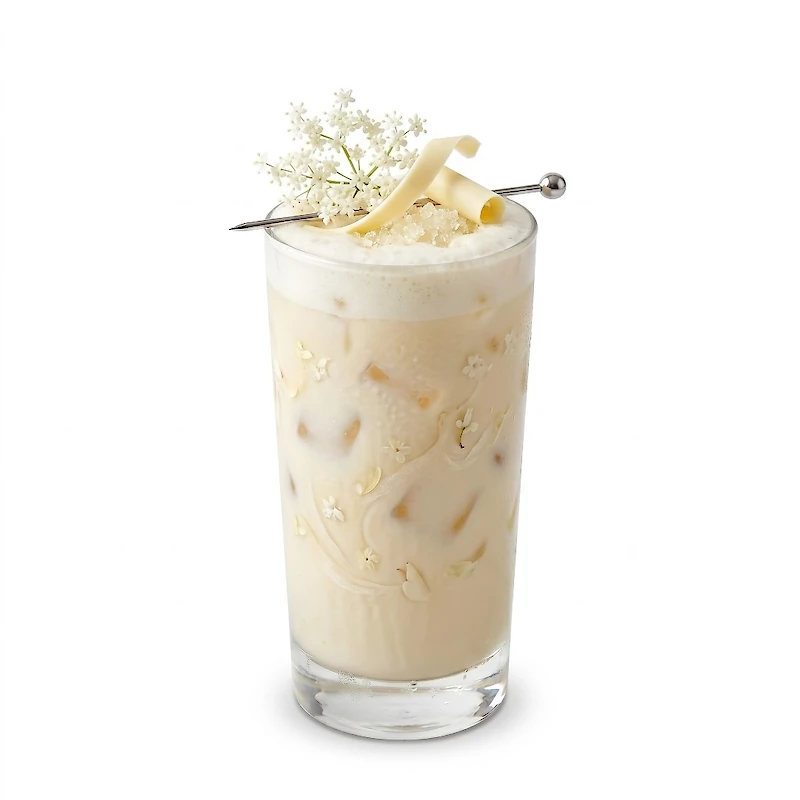
- Elderflower White Chocolate (botanical, elegant, lightly sweet): a premium UK botanical signature.
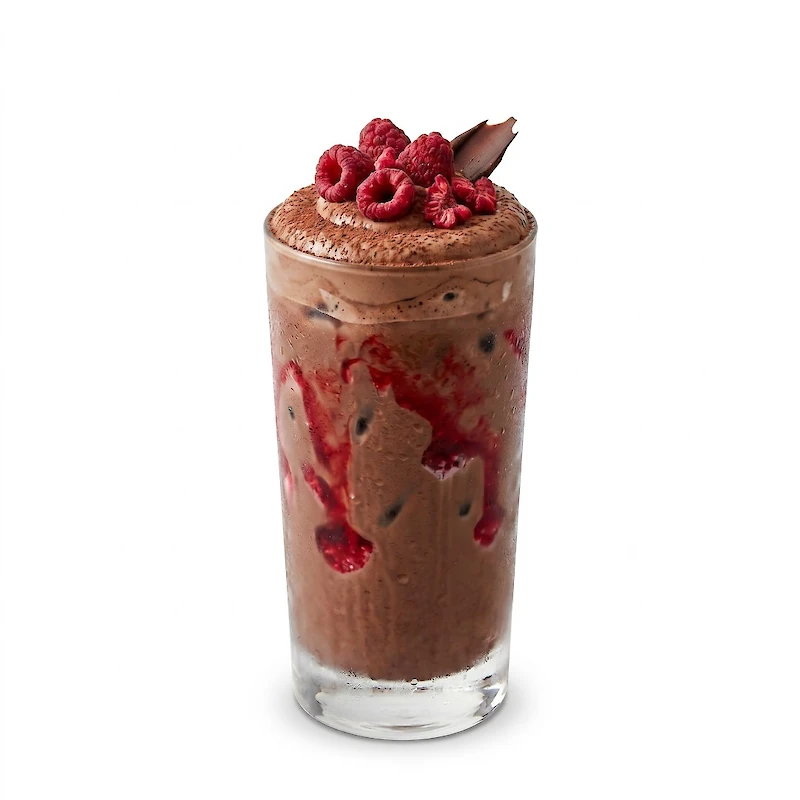
- Raspberry Iced Chocolate (sharp, vibrant, freeze-dried intensity): the highest-impact visual on shelf and menu.
The format question sits alongside the flavour question. Each of the above is built to perform as a powder base, a liquid concentrate or a syrup-style format, so the same flavour direction can ship as a back-of-bar mix for cafe chains, a chilled RTD for retail, or a single-serve at-home kit without a separate development cycle.
Regulation Is Now an NPD Driver
From 8 October 2025, new UK regulations banned HFSS price and multibuy promotions in England, including in hospitality settings. From 5 January 2026, HFSS advertising is restricted online and pre-9pm on TV. For cold beverage operators, the practical effect is sharper sugar reduction targets and a higher bar for nutritional credibility.
The Soft Drinks Industry Levy reform consultation concluded with the SDIL threshold lowered to 4.5g per 100ml, with milk-based drinks newly brought into scope from 1 January 2028. Most milk-based iced chocolate currently sits outside SDIL scope, but the direction of travel is clear: from January 2028, pre-packaged milk-based and milk-alternative drinks with added sugar, including chocolate milk drinks and ready-to-drink coffees, will be in scope.
The ingredient brief that wins in 2026 is one that delivers the indulgent sensory profile while supporting reduced sugar formulations: high-intensity natural sweeteners and sugar substitutes such as monk fruit, stevia and erythritol, flavour intensifiers that compensate for sugar removal, and clean-label sweetener systems with retail-grade sensory credibility.
Working with Uren
Our beverage development team supports a year-round iced drinks portfolio across indulgence, refreshment and wellness, designed for cafe chains, at-home barista brands and premium beverage manufacturers looking to extend beyond traditional hot formats. The iced chocolate range above sits alongside cold matcha and tea and botanical refresher concepts, with each direction available as a powder base, a liquid concentrate or a syrup-style format. Working with Aromatech, we supply chocolate, vanilla, citrus, berry and floral flavour systems formulated for cold dispersion, chilled stability and clean-label declaration.
To discuss a flavour project or request samples, contact our beverage development team at sales@uren.com or +44 (0)151 353 0330.